Why Cold Exposure?
Cold exposure therapy is not new news. Variations of cold and extreme cold exposure have been used for thousands of years across different cultures to support resilience, recovery and overall wellbeing.
Today, cold exposure is becoming increasingly mainstream as research continues to explore how controlled cold stress can positively influence both the body and mind when applied safely and progressively.
Cold Shower or Full Submersion?
Cold exposure can be introduced in different ways, each creating a slightly different physiological response.
- Cold showers primarily stimulate the skin and nervous system. They are easier to control, making them ideal for beginners, and short exposure times still provide mental and nervous system benefits.
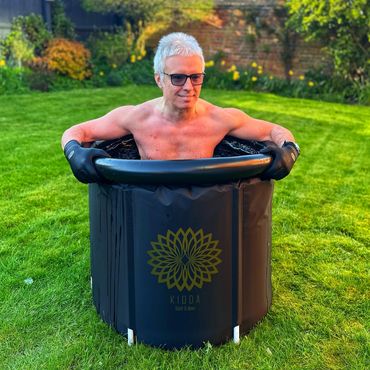
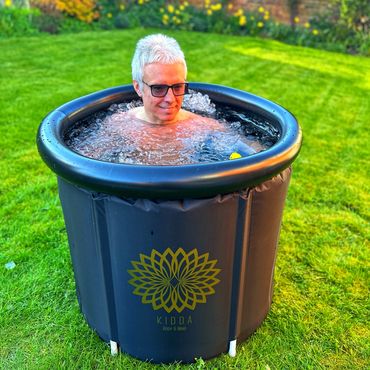
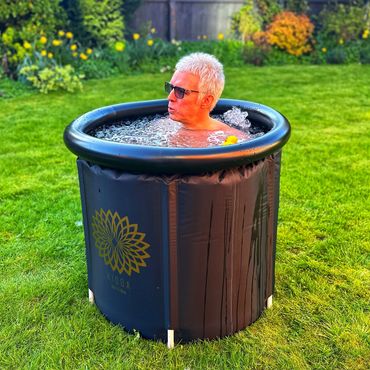
- Ice pod or ice bath (full submersion) creates a stronger whole-body response, involving a greater thermal load and deeper physiological adaptation. Full submersion activates thermogenesis and brown fat more significantly.
For most people, it is recommended to start with cold showers, progress to cold baths after heat exposure such as a sauna or hot bath, and only then explore full ice pod or ice bath submersion.
Pre and Post Exercise Use
Cold exposure can be used both before and after exercise, but timing and intent matter, as the physiological response differs depending on when it is applied.
Before exercise
Short cold exposure before training can support mental readiness rather than physical preparation. It increases alertness and focus through elevated noradrenaline, can enhance motivation and perceived readiness, and is best used for mental activation rather than muscle priming.
Timing guidance
- Keep exposure brief, typically 30 seconds to 2 minutes
- Allow 10 to 20 minutes between cold exposure and exercise
- Avoid prolonged cold before strength or power training, as it may reduce muscle temperature and force output
Cold exposure before exercise is best suited to light to moderate aerobic work and situations where mental sharpness is the priority.
After exercise
Cold exposure after training is most commonly used to support recovery. It may help reduce muscle soreness and local inflammation, supports nervous system downregulation after intense sessions, and is useful following endurance, high-volume or contact-based exercise.
Timing guidance
- Wait at least 30 to 60 minutes after training before cold exposure
- This allows natural inflammatory and anabolic signalling to begin
- Use cold exposure on the same day, but not immediately post-session
Important consideration
Frequent cold exposure immediately after strength or hypertrophy training may blunt muscle growth and adaptation. It is best reserved for competition phases, high training loads, or recovery-focused days rather than daily strength blocks.
The Science
Cold exposure creates a short-term stress response in the body, often referred to as cold shock. This includes an immediate increase in breathing rate and nervous system activation.
The skin detects extreme cold and sends signals to the brain indicating a threat to body temperature. In response, the body releases significant increases in neurotransmitters, with studies showing rises of up to 250% in dopamine and 500% in noradrenaline following cold exposure. These chemicals support alertness, motivation, mood and focus while activating the sympathetic fight or flight response.
Noradrenaline plays a key role in activating brown adipose tissue, which is rich in mitochondria. Brown fat generates heat through thermogenesis by breaking down glucose and fat molecules, increasing energy expenditure and supporting metabolic health.
Cold exposure also causes blood vessels in the arms and legs to constrict, a process known as vasoconstriction, helping preserve warmth in the body’s core. As exposure continues, heat loss may exceed heat production and shivering begins, which is a clear signal to exit the cold.
Post Cold Exposure
After exiting the cold, blood vessels dilate and warmth redistributes from the core to the skin, muscles and extremities. This rebound in circulation supports nutrient delivery and waste removal.
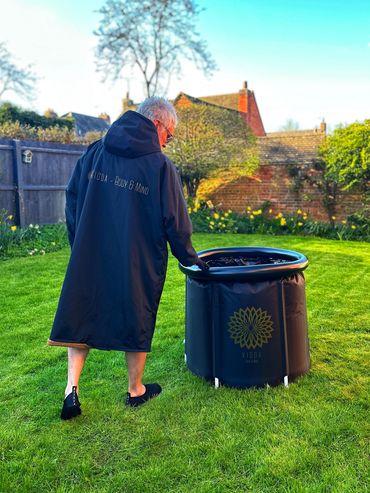
It is normal to continue feeling cold for a short period after exposure. Gentle movement, layered clothing and gradual rewarming help restore core body temperature safely.
Benefits
- Improves blood circulation
- Supports metabolic health
- Reduces inflammation
- Eases sore and aching muscles
- Improves mental wellbeing and stress resilience
- Enhances alertness, focus and mood
- Supports recovery when used appropriately

KIDDA BODY & MIND ICE POD